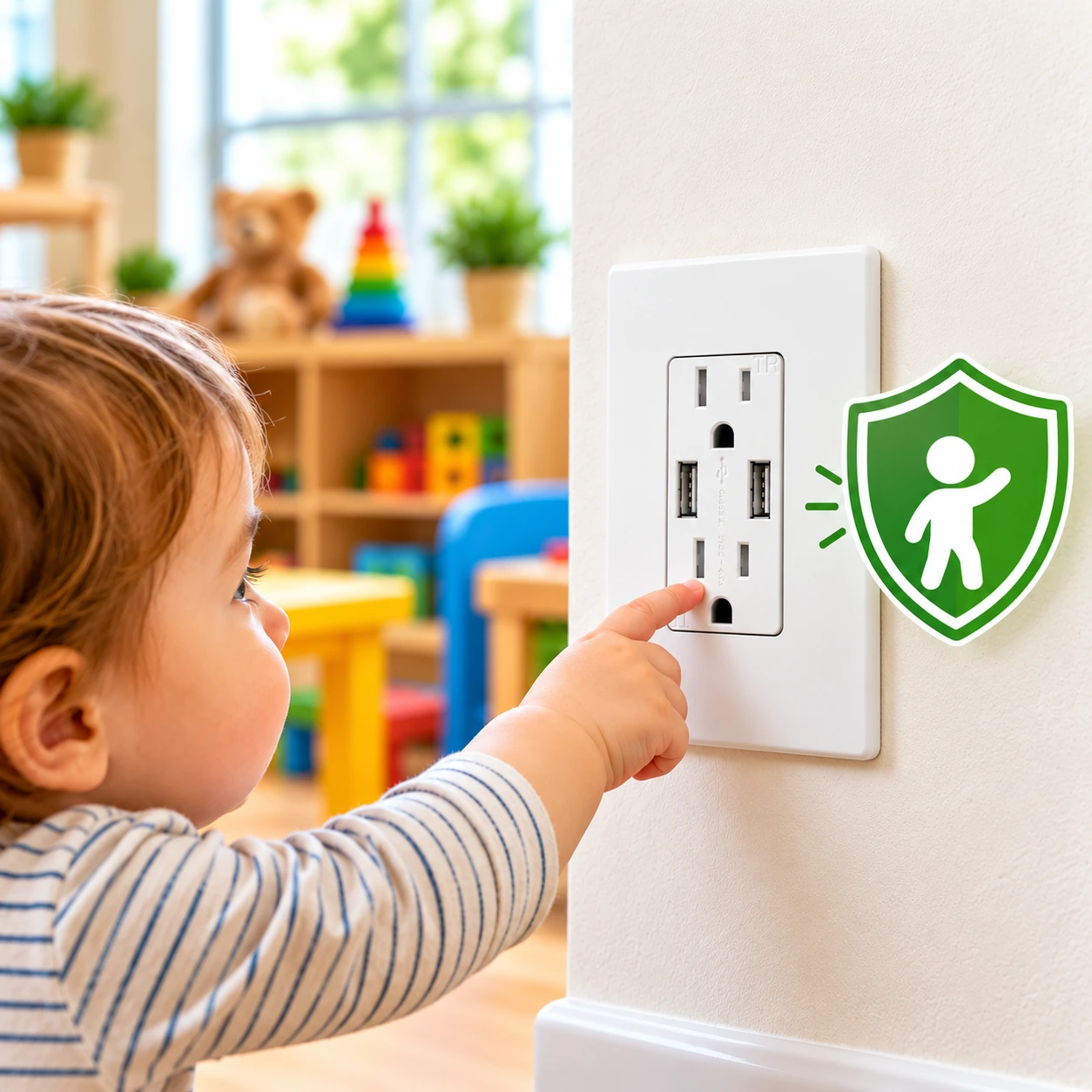
A receptacle may stay hidden behind a shelf for months, then become accessible when a classroom is rearranged for a new age group. In busy daycare and preschool spaces, electrical safety receptacles for children matter because young children learn by touching, testing, and exploring their surroundings. Tamper-resistant receptacles help make outlet protection part of the installed environment, instead of depending only on loose accessories or perfect daily routines.
Tamper-resistant receptacles, often called TR receptacles, are important in childcare facilities because their protective mechanism remains inside the receptacle. Unlike a removable cap, built-in protection does not have to be replaced every time staff use a vacuum, move a charging station, unplug classroom equipment, or reset a room after cleaning. For childcare owners, directors, and property managers reviewing electrical safety receptacles for children, Safety Receptacles invites manufacturers and qualified partners to explore its patented prototype designs as a future-facing approach to built-in outlet protection.
Why Built-In Protection Matters in Childcare Spaces
Childcare rooms change constantly. A reading corner may become a nap area. A play table may move closer to a wall. A shelf that once blocked an outlet may be shifted during cleaning, maintenance, or classroom reorganization.
That is why outlet protection should be viewed as a layer of facility safety, not a one-time purchase. Staff supervision remains essential, but no staff member can watch every accessible receptacle every second of the day. Built-in tamper resistance helps keep a protective barrier in place even when routines change.
Are Outlet Caps Enough?
Outlet caps can be useful in some settings, but they rely on consistent replacement after every use. In an active childcare facility, small removable parts can be misplaced, removed during cleaning, left off after equipment use, or forgotten when furniture moves.
The U.S. Consumer Product Safety Commission notes that no device is completely childproof and recommends tamper-resistant types when receptacles are replaced. That guidance supports a practical approach: use built-in safeguards where appropriate, keep rooms inspected, and avoid assuming any single device eliminates every electrical concern.
TR, GFCI, and AFCI Protections Do Different Jobs
A tamper-resistant receptacle is designed to restrict physical access through the outlet slots unless a properly positioned plug operates the internal mechanism. A GFCI device responds to certain ground-fault conditions that may create shock risk. An AFCI device addresses hazardous arcing conditions that may contribute to electrical fires.
Some childcare locations may also require weather-resistant devices, protective covers, or other code-driven features. The correct choice depends on the room, circuit, property type, inspection requirements, and locally adopted electrical code. Facility managers should verify requirements with a qualified electrician, inspector, or local authority before planning replacements.
Where Safety Receptacles Fits In
Safety Receptacles develops patented prototype technology intended to examine outlet access protection and everyday plug usability. The company’s two patented designs are intended to respond to characteristics associated with standard plug blades, including scenarios involving more than one inserted object.
This matters because childcare facilities need protection that is both consistent and usable. If staff struggle with plug insertion, daily operations can become frustrating. Prototype demonstrations from Safety Receptacles indicate an effort to preserve smooth, familiar plug use while exploring additional access-control concepts.
However, transparency is important. Safety Receptacles’ patented designs are prototypes, not retail products. They are not currently available for childcare-facility installation, and they should not be described as listed, certified, or approved replacement devices. Commercial use would require further engineering, independent testing, product listing, manufacturing, and distribution.
Practical Steps for Childcare Decision-Makers
A childcare facility can strengthen outlet safety by reviewing accessible receptacles room by room. Directors can approve safety priorities, teachers can report damaged or newly exposed outlets, facility managers can schedule electrical work, property owners can authorize upgrades, and electricians can confirm whether receptacles and circuits match current requirements.
A helpful checklist includes:
- Inspect rooms after furniture changes.
- Replace damaged receptacles or loose plates promptly.
- Use listed products suitable for the location.
- Confirm where GFCI or AFCI protection is required.
- Keep electrical cords and equipment placed safely.
- Document repairs, inspections, and corrective action.
Conclusion
Tamper-resistant receptacles are important for childcare facilities because they provide a built-in safety baseline that does not depend entirely on removable caps or staff memory. They do not make a room completely child-proof, but they can support safer daily operations when paired with supervision, inspections, proper installation, and code-aware maintenance. For future innovation, Safety Receptacles continues to present patented prototype concepts focused on electrical safety receptacles for children, multi-object access concerns, and familiar plug usability.
Explore Safety Receptacles’ patented prototype designs and contact us to discuss manufacturing, licensing, or product-development opportunities.